The Royal Court Theatre Presents
The River
by Jez Butterworth
18 October - 17 November 2012
Jerwood Theatre Upstairs
Tickets: £20. Mondays all seats £10
“At dawn I went back to the river, and I took off my clothes and dived in the freezing water.
I searched and searched but it was gone.
But when I surfaced, I was holding something.
Something else.”
Next Production: NSFW
Tickets for today’s performances, Saturday 17 November, have now sold out.
A remote cabin on the cliffs, a man and a woman, and a moonless night.
The writer director team that brought Jerusalem to the Royal Court return with a bewitching new story
Tickets for The River will be released each day at 9am online.
An allocation of 30 tickets will also be available for purchase in person at the Royal Court Theatre Box Office from 10am. (Please be aware that there is no cover from the weather for the day seats queue.)
All patrons can purchase a maximum of 2 tickets each.
Please click here for further information and frequently asked questions on how to book tickets online for this production.
Jez Butterworth’s most recent play at the Royal Court was the critically-acclaimed hit Jerusalem in 2009, directed by Ian Rickson, which went on to play two record breaking runs in the West End, as well as transferring to Broadway. His first play Mojo opened at the Royal Court, winning five awards including the Evening Standard and Critics’ Circle Awards for Most Promising Playwright and the Olivier Award for Best Comedy. Other plays at the Royal Court include The Night Heron and The Winterling. Credits elsewhere include Parlour Song_ at the Almeida. On film, his credits include Mojo, starring Harold Pinter, Birthday Girl, starring Nicole Kidman and Fair Game starring Sean Penn and Naomi Watts.
Ian Rickson reunites with Jez Butterworth to direct. Rickson last directed Butterworth’s multi-award-winning play Jerusalem at the Royal Court, West End and on Broadway. He also directed Butterworth’s previous shows The Winterling, The Night Heron, Mojo and Parlour Song, He was Artistic Director of the Royal Court from 1998 -2006 where his many productions included The Seagull, which transferred to Broadway, Krapp’s Last Tape which he also directed for BBC4, Fallout which he also directed as a film for Channel 4 and The Weir and Mojo both of which transferred to the West End and Broadway. Other recent credits include Hamlet (Young Vic), Hedda Gabler (Broadway), Betrayal (West End), The Children’s Hour (West End) and The Hothouse (National Theatre).
Running time 1hr 20 mins approx.
Select a Date
| Date | Time | Venue | Notes | Prices | Booking Link |
|---|---|---|---|---|---|
Available Performances |
|||||
Dates in October |
|||||
| Thu 18 Oct 2012 | 7:45pm | Concessions Available | Jerwood Theatre Upstairs | £20 | |
| Fri 19 Oct 2012 | 7:45pm | Concessions Available | Jerwood Theatre Upstairs | £20 | |
| Sat 20 Oct 2012 | 7:45pm | Concessions Available | Jerwood Theatre Upstairs | £20 | |
| Mon 22 Oct 2012 | 7:45pm | Jerwood Theatre Upstairs | £10 | ||
| Tue 23 Oct 2012 | 7:45pm | Concessions Available | Jerwood Theatre Upstairs | £20 | |
| Wed 24 Oct 2012 | 7:45pm | Concessions Available | Jerwood Theatre Upstairs | £20 | |
| Thu 25 Oct 2012 | 7:45pm | Concessions Available | Jerwood Theatre Upstairs | £20 | |
| Fri 26 Oct 2012 | 7:00pm | Press Night | Jerwood Theatre Upstairs | No Day Seats available for this performance | |
| Sat 27 Oct 2012 | 3:30pm | Concessions Available, Saturday Matinees | Jerwood Theatre Upstairs | £20 | |
| Sat 27 Oct 2012 | 7:45pm | Concessions Available | Jerwood Theatre Upstairs | £20 | |
| Mon 29 Oct 2012 | 7:45pm | Jerwood Theatre Upstairs | £10 | ||
| Tue 30 Oct 2012 | 7:45pm | Post-Show Talk | Jerwood Theatre Upstairs | £20 | |
| Wed 31 Oct 2012 | 7:45pm | Jerwood Theatre Upstairs | £20 | ||
Dates in November |
|||||
| Thu 1 Nov 2012 | 3:30pm | Concessions Available, Mid-Week Matinee | Jerwood Theatre Upstairs | £20 | |
| Thu 1 Nov 2012 | 7:45pm | Jerwood Theatre Upstairs | No Day Seats available for this performance | ||
| Fri 2 Nov 2012 | 7:45pm | Jerwood Theatre Upstairs | £20 | ||
| Sat 3 Nov 2012 | 3:30pm | Concessions Available, Saturday Matinees | Jerwood Theatre Upstairs | £20 | |
| Sat 3 Nov 2012 | 7:45pm | Jerwood Theatre Upstairs | £20 | ||
| Mon 5 Nov 2012 | 7:45pm | Jerwood Theatre Upstairs | £10 | ||
| Tue 6 Nov 2012 | 7:45pm | Jerwood Theatre Upstairs | No Day Seats available for this performance | ||
| Wed 7 Nov 2012 | 7:45pm | Jerwood Theatre Upstairs | £20 | ||
| Thu 8 Nov 2012 | 3:30pm | Concessions Available, Mid-Week Matinee | Jerwood Theatre Upstairs | £20 | |
| Thu 8 Nov 2012 | 7:45pm | Jerwood Theatre Upstairs | £20 | ||
| Fri 9 Nov 2012 | 7:45pm | Jerwood Theatre Upstairs | £20 | ||
| Sat 10 Nov 2012 | 3:30pm | Concessions Available, Saturday Matinees | Jerwood Theatre Upstairs | £20 | |
| Sat 10 Nov 2012 | 7:45pm | Jerwood Theatre Upstairs | £20 | ||
| Mon 12 Nov 2012 | 7:45pm | Jerwood Theatre Upstairs | £10 | ||
| Tue 13 Nov 2012 | 7:45pm | Jerwood Theatre Upstairs | £20 | ||
| Wed 14 Nov 2012 | 7:45pm | Captioned Performance | Jerwood Theatre Upstairs | £20 | |
| Thu 15 Nov 2012 | 3:30pm | Concessions Available, Mid-Week Matinee | Jerwood Theatre Upstairs | £20 | |
| Thu 15 Nov 2012 | 7:45pm | Jerwood Theatre Upstairs | £20 | ||
| Fri 16 Nov 2012 | 7:45pm | Jerwood Theatre Upstairs | £20 | ||
| Sat 17 Nov 2012 | 3:30pm | Concessions Available, Saturday Matinees | Jerwood Theatre Upstairs | £20 | |
| Sat 17 Nov 2012 | 7:45pm | Jerwood Theatre Upstairs | £20 | ||
Sold out Performances |
|||||
For The River, no tickets will be available for advance purchase. All tickets will go on sale on the day of performance, with an allocation on sale online at 9am and an allocation released for in person sales at 10am from the Royal Court Theatre Box Office.
Tickets £20 Monday all seats £10 (available on the day of the performance from 9am online)
Concessions £15 (available until Saturday 27 October, and all matinees)
Access £12 (plus a companion at the same rate)
No Day Seats available for Friday 26 October, Thursday 1 November (eve) and Tuesday 6 November
Jez Butterworth
Writer
Ian Rickson
Director
Ultz
Designer
Charles Balfour
Lighting Designer
Ian Dickinson for Autograph
Sound Designer
Stephen Warbeck
Composer
Reviews
5 stars Daily Mail by Quentin Letts, 26 October 2012
Hot playwright Jez Butterworth may have hooked another winner but his potent new play is showing in such a tiny studio that few will be able to catch it.
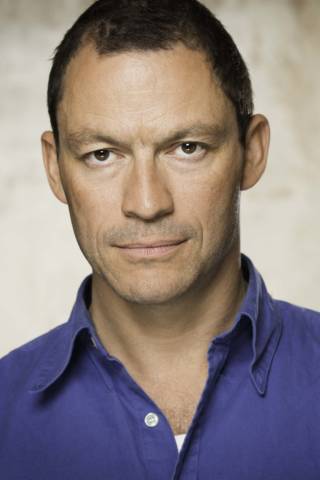
Dominic West plays The Man – that lack of a name matches his inscrutability.
We are in a cottage in the hills. We can hear a river. The cottage has no electricity and poor mobile telephone reception.
The Man, a handsome 40-something, has brought his new lover (also nameless) to his lair. How trusting of her.
It all starts jokily enough. The Man is in his angling gear. He wants to go fishing on a moonless night. Is he casting for trout? Or for love? Or control?
Mr Butterworth’s last success was Jerusalem, set in darkest Wiltshire.
He is good at confronting his urban audiences with vistas of nature. Away from concrete, man reverts to something more feral.
How much more interesting it is, as a theatregoer, to hear talk about river pools and highland gorges – and even fishing tackle – than to be subjected to the usual cityscape cliches.
Mr Butterworth, apart from a horrid reference to ‘Christian era’ when he means ‘A.D.’, writes beautifully.
He describes the muddy impulses of the river fish almost as poetically as Ted Hughes, whose verse we hear at one point. Yet there are also the urges, the instincts (not least for survival) of young women.
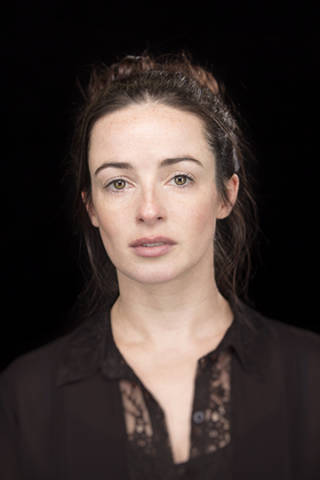
The girlfriend in the opening scene is played by blonde Miranda Raison. Without warning, she disappears, to be replaced by a different woman (dark-haired Laura Donnelly).
They chop and change, never meeting. The Man is playing a line. He really does ‘say that to all the girls’. In a way this is an intellectual Shirley Valentine, with a dose of Alfred Hitchcock menace.
On stage Mr West is brilliantly liquid. I wish he would not pronounce ‘lure’ in an American manner but otherwise his performance is faultless.
The women are strongly acted, too, attracted by the ‘otherness’ of this country-wise hunter.
But how remote he is! Almost as remote as the cottage…
4 stars The Telegraph by Charles Spencer, 26 October 2012
One doesn’t envy Jez Butterworth as he set about writing this play. How do you follow a smash hit like Jerusalem?
It proved the best new play of the present century, and those who saw it will never forget Mark Rylance’s electrifying performance as Rooster Byron, a character of almost Shakespearean richness and allure.
Wisely, Butterworth has decided to do something entirely different. Jerusalem was the theatrical equivalent of a mighty concerto, with Rylance as the thrilling soloist and the rest of the cast as his crack supporting musicians.
In contrast The River is like a subtly crafted piece of chamber music. It is teasing, haunting and hushed, with just three speaking roles for unnamed characters.
It is also damnably difficult to write about as there is a mystery at its heart that I must not reveal. The dramatist himself has described The River as “a cross between a poem and a vulture” which sounds pretentious until you see it, when the phrase suddenly seems bang on the money.
Like Jerusalem, the play is set in the English countryside, in a wooden cabin near a river, cosily evoked by the designer Ultz.
The central character, played by the splendid Dominic West, is a burly, bearded bloke who is passionate about fishing. He has brought a new girlfriend with him and is thrilled at the prospect of catching sea trout on a moonless night.
She seems a good deal less excited, but in the next scene, it looks as though she might have drowned. Then Butterworth springs the first of his surprises, as another woman enters the hut.
I must not give any more away, but in Ian Rickson’s expertly judged production the play grips throughout its 80 minute running time. It is also beautifully written “mixing memory with desire” in TS Eliot’s haunting phrase from The Waste Land. Even more remarkably, the descriptions of fishing are so vivid that though I have always regarding anglers with a mixture of pity and contempt, I now feel like taking it up myself.
West suggests darker depths beneath the central character’s apparently innocent, love-struck enthusiasm, and makes Butterworth’s thrilling nature writing really sing. And there are two neatly defined and contrasting performances from Miranda Raison and Laura Donnelly as the two women.
The River may not achieve the knockout impact of Jerusalem, but this subtle, troubling piece is likely to nag away in the memory of all who see it.
4 stars Time Out by Andrzej Lukowski, 26 October 2012
Jez Butterworth’s new play is not going to replicate the success of his last one: the barnstorming ‘Jerusalem’ was, after all, the defining British drama of recent times. But in its low-key way ‘The River’ is one of the best productions of the year, a haunting 80 minutes that again confirms the potency of Butterworth’s partnership with ‘Jerusalem’ director Ian Rickson.
It’d be over-simplifying the play’s ambiguities to call it a ghost story, but Rickson’s production certainly aims to chill (if it’s a coincidence it’s playing over Halloween, it’s a happy one).
In an isolated country cabin, on a cliff overlooking a river, a man (Dominic West) and his new girlfriend (Miranda Raison) are bickering away. He wants to go sea, trout fishing in the dark of the new moon; she isn’t so sure. But they do go out, returning to the cabin separately. And the woman who comes back (Laura Donnelly) now appears to be somebody else entirely; yet the man seems not to notice.
‘The River’ is a swirling mist of memory, magical realism and hinted-at folklore, bound by some terrific acting and the gorgeous bucolic lyricism of Butterworth’s language. What it all means will be up to your personal interpretation. But, like ‘Jerusalem’, ‘The River’ probes the relations between man and nature’s wildness – one can imagine it’s taking place in a colder, darker corner of the England inhabited by ‘Rooster’ Byron and co. And as with ‘Jerusalem’ its strangeness is sugared by a lot of very good jokes (most of them about fishing) and a superb performance from its lead man. West’s overgrown, socially inept boy scout is awkward charm personified, yet by the end one feels frightened by him without quite being able to say why.
Staging ‘The River’ in the 85-seat Upstairs theatre, with only day-seats available, has been the source of some controversy. But a larger space would take a great deal of power away from Rickson’s quietly intense production, and I suspect the loss of intimacy would make the script harder to swallow. None of this means the Court shouldn’t try and transfer it on somewhere though. In its present state ‘The River’ is pure magic. A magnetically eerie, luminously beautiful psychodrama about the changes that happen in dark places.
4 stars The Guardian by Michael Billington, 27 October 2012
Because everyone wants to see Jez Butterworth’s first new play since Jerusalem and because space is limited at the Theatre Upstairs, tickets are hard to come by. You either have to go online or queue at the box office first thing. Although that may preclude potential customers, Butterworth’s play undeniably gains from intimacy. At 80 minutes, it is strange, eerie, tense and, on a single viewing, slightly unfathomable.
At first, all looks reasonably clear. As in previous Butterworth plays such as The Night Heron and The Winterling, the setting is rurally remote. We are in a wooden cabin on the cliffs above a river. It belongs to The Man (Dominic West) who is playing host to The Woman (Miranda Raison). The West figure is a dedicated fisherman who goes into ecstasies about sea trout, which can be caught in profusion on a moonless night once a year. This is just such a night and the capacity to share his excitement becomes a moral test for Raison’s character, who appears to be his new girlfriend.
So far, so explicable. But the second scene starts with West making a panic-stricken phone call to the police about a woman who has gone missing during a nocturnal fishing expedition. At which point the door bangs, to West’s relief the call is aborted and in walks not the expected guest but The Other Woman (Laura Donnelly). She angers West by revealing she has broken the rules by catching a sea trout with the aid of a young poacher who has attached a pickled onion to the rod. Unlike the more spiritual Woman, this character is friskily down to earth and the scene ends with West gutting the trout in readiness for supper.
If I give away this much plot, and there is plenty more to come, it is to try to pin down what Butterworth is writing about. Since the two women exchange places scene by scene, and there are strong hints they are part of a long line, it appears we are watching some annual ritual. West’s character is a reclusive loner who invites each new woman to share his passion for trout fishing, declares his love for them but, inevitably disappointed, seeks to memorialise them through a drawing. Far from being a hymn to nature, the play is about the rooted solitude of a man who has subordinated his love for people to the more arcane pursuit of sea trout.
“Death,” Turgenev wrote, “is like a fisherman” who nets a fish, watches it swimming about and snatches it out in his own good time. And Butterworth is writing about a man who invests all his emotions in that godlike activity. But the fascination of his play is that it leaves one unsure whether one is watching a ghost story, gothic thriller or parable. My only cavil is that Butterworth sometimes lapses into passages of “fine writing”. At one point The Man has a long speech about catching his first fish in which lines such as “just then a big chapel of cloud pushed overhead” have a self-consciously literary quality.
But the play kept me on tenterhooks and Ian Rickson’s production is finely calibrated. The acting is also impeccable. West proves not only expert at gutting fish but also has an air of rugged masculinity that conceals a profound sadness, insecurity and sense of loss. The two women are also perfectly contrasted. Raison has the sharp, probing intensity that befits a character who brings To the Lighthouse with her on a fishing holiday, while Donnelly is more skittish, flirty and lighter in texture.
This is not, in the end, as resonant and public a play as Jerusalem. But it adopts a similarly equivocal attitude to its hero, is endlessly mysterious and confirms that Butterworth possesses a singular talent. I only wish that more people could get in to see it.
4 stars The Independent by Paul Taylor, 27 October 2012
Short of setting himself on fire in the Royal Albert Hall, it’s hard to see what Jez Butterworth could have done as an encore commensurate with the stonking transatlantic triumph of Jerusalem.
So it’s perhaps no great surprise to find the author working at the opposite end of the scale from that anarchic state-of-the-nation drama now in The River, his much-anticipated follow-up play, which opened last night. The fact that Butterworth has insisted – on artistic grounds – that this new piece should be premiered in the Royal Court’s 90-seat Theatre Upstairs means the show is a hot ticket for more reasons than one. The Court has instituted a policy whereby tickets can be purchased only on the day of performance.
So the first thing I should say, having now seen Ian Rickson’s spellbinding, exquisitely modulated production, is that getting into The River is well worth any additional hassle you may have to go through with the booking. Lyrical and tricksy, occasionally droll and ultimately desolating, this intimate three-hander unfolds like a tantalising cross between a piece of deeply felt poetry and a sleight-of-hand puzzle.
On a moonless night in August when the salmon trout are ready to run, Dominic West’s bearded, hunky unnamed Man brings his new girlfriend (a feisty, ironic but underlyingly vulnerable Miranda Raison) to the remote family cabin where he has come for the fly-fishing since he was a boy. She is jokily reluctant to be initiated into the sport or to listen to his rhapsodies about its moments of electric, almost mystical intensity (“It’s like catching a lightning bolt. It’s like jamming your finger into a socket.”). And she’s narked when he dismisses the beauty of the sunset (“They’re all the same”) and invents a bravura, all-purpose description that parodies the idea of quiddity.
His mockery is somewhat paradoxical for, in matters of love, it emerges that the man has a compulsive need to create the illusion that a woman is uniquely special to him. The play becomes mountingly haunted by echoes of previous, supposedly once-in-a-lifetime visits and by the recurring motifs of the man’s duplicity (framed drawings, say, of women with their faces crossed out) and by the ambivalent imagery of reflections in water.
In its pacing, Rickson’s production is beautifully responsive to the musicality of the play’s patterning and Dominic West turns in a compellingly layered performance as the Man. It’s agonising when he tells Laura Donnelly’s raven-haired, mischievous and searchingly speculative Other Woman that he will be a ghost making love to a succession of impostors if she leaves him. This is not just on account of the dreadful way his deceptions get through the rational defences of his victims. It’s because you feel that there’s a hunger for honesty but that he is helpless to stop these inauthenticities. Plus, you reckon that this serial liar has a weakness for being found out.
4 stars The Independent on Sunday by Kate Bassett, 28 October 2012
The proverbial one that got away is always the whopper, the elusive prize catch. Well, it’s a bit like that for some trying to secure a ticket to the Royal Court’s keenly awaited premiere of The River, a darkening chamber play written by Jez Butterworth and starring Dominic West.
Obviously West is a big draw, and last year’s long queues for Butterworth’s previous stupendous hit, Jerusalem, made headlines. Nevertheless, the Court has tucked The River into its attic studio, and made more headlines by creating an on-the-day-only scramble for tickets – with its online allocation released at 9am. The try-and-try-again technique may succeed, though. The punter sitting next to me said he’d only failed the first time (naively reckoning there would still be seats available at 9.01).
The Theatre Upstairs is enthrallingly intimate, transformed into a log cabin, lit by paraffin lamps and flickering candles. This is the riverine pad where West’s unnamed character, an artist with a passion for angling, brings his new girlfriend (Miranda Raison), to introduce her to night-fishing and to bare his heart. The place is, however, haunted by another woman (Laura Donnelly) – maybe a memory, maybe only imagined.
Butterworth’s dialogue flips between wryly humorous, naturalistic exchanges and more stylistically heightened passages. The latter might describe an offstage sunset with blood-red and lilac-blue clouds, or the first trout that West ever netted. It exploded out of the mirror-smooth water then writhed on the bank – brown, silver, orange – like a bar of precious metal, like God’s tongue, he says. Those speeches can sound obtrusively artificial, and this may be deliberate. Butterworth endows his characters with literary inclinations – reciting Ted Hughes’s verse – and West refers to fishing as crafted trickery too, enticing the prey with fake bait.
A teaser, the drama plays startling games with time and morphs into a psychological thriller. West seems a sincerely smitten romantic, padding around the cabin in check shirt and socks, cooking while his sweetheart takes a shower, and declaring she’s his one and only. Or is he a control freak, a fantasist, a serial womaniser with dangerous intentions who has to be given the slip? Rustling up supper certainly gains a sinister edge as he guts a trout with a flashing silver blade, hacks off its head, and slips its oil-slooshed body into a scorching oven.
Director Ian Rickson’s cast are compelling, Raison lured by West but fighting back, and Donnelly developing a jealousy-mocking glimmer in her eye. The River may not be as great as Jerusalem, but it’s a disturbing slow burn
4 stars The Evening Standard by Henry Hitchings, 29 October 2012
After the anarchic immensity of his multi-award-winning Jerusalem, Jez Butterworth returns to the Royal Court with a lyrical miniature — an 80-minute piece that feels like a ghostly riddle while also flickering with humour.
The characters are nameless, and the story is the sort of twisty puzzle that critics are often scolded for ruining with spoilers. Suffice it to say that it is bewitchingly strange – watery and wild but deftly crafted. The central figure, played by Dominic West, is an earthy, bearded fishing fanatic. He has a penchant for taking younger women to a rough log cabin (a superb design by Ultz) to initiate them into the mysteries of angling. He plies them with astounding turns of phrase, masculine charm and evidence of his sensitivity. Yet as he bares his emotions we begin to wonder whether he is a trickster.
West’s performance is dense and hefty. He suggests that his character is a romantic but also a fantasist. In one gorgeous, wordless scene he prepares a trout for the oven, turning some basic culinary business into a throbbing episode of foreplay. Alongside him Miranda Raison has a lovely mix of magnetism and vulnerability, while Laura Donnelly exudes an air of puckish mischief.
The writing is poetic, and Butterworth reveals his influences in references to W. B. Yeats and Ted Hughes (both quoted affectionately). Less overt are the debts to Moby-Dick, T. S. Eliot and Harold Pinter. Butterworth’s own language switches between bluntness and lush rhapsody, especially in a long speech by West about a fishing trip when he was seven: the water was ‘gin-clear’, the wind whipped up its surface ‘like a million pinpricks’, ‘a big chapel of cloud’ pushed into view, and a particular fish resembled both a bar of precious metal and God’s tongue.
In Ian Rickson’s finely judged production these purple moments are savoured, and so are Butterworth’s ambiguities. The River is a chamber piece, better suited to the upstairs studio space at the Royal Court than a larger stage. Still, it’s a shame that more people won’t get to see this absorbing play, which is subtly eloquent about duplicity, memory, myth-making and the theatrical nature of relationships.
4 stars The Times by Libby Purves, 29 October 2012
A woman’s voice sings, vaguely from Yeats’s The Song of the Wandering Aengus: “I went out to a hazel wood because a fire was in my head…” Under the cramped roofspace – the celebrated author asked for a small studio and unbookable seats for his new play – the designer Ultz’s carefully battered camping domesticity puts us inside a fisherman’s clifftop hut, above an unseen river and darkening sea.
It is easy to see why Jez Butterworth wanted us tightly cocooned inside the unnerving, primal spaces of his imagination. Moreover, early in his eerily brilliant 80-minute thriller, a sly moment makes it clear that he wishes we would not keep going on about his previous play, Jerusalem, where Mark Rylance’s storming Rooster Byron had British and Broadway audiences emerging shaken, with a hidden wish that they dared to be less respectable.
The hint about forgetting past work comes when Dominic West, as the unnamed fisherman, tries to get his flirty, lounging girlfriend (Miranda Raison) to come to the moonless riverbank. He hands her an open book with a poem to inspire her; but when she glances at the spine and goes “hmm” (it is a Ted Hughes poem) he is angry. The message couldn’t be clearer: forget the author, forget preconceptions, listen and feel the moment.
If you did want to make comparisons with Jerusalem you could say that the longer play was violent dynamite-fishing, a great brawling splash throwing up all manner of deep monsters, whereas this is delicate: a fly-fisherman’s piece of trickery, ripples and reflections. Its iridescent beauty and menacing hook hover just out of reach, so that we snap breathlessly up towards meaning, half-hungry, half-afraid.
Raison and Laura Donnelly play young women we might all know; West at first is ordinary too, a fly-fishing anorak, but gradually seems to be something else, raw and unsettling. Tales of Bluebird flicker in the memory: one wishes he had not so brilliantly portrayed Fred West on television.
Not that there is anything crude here, only a delicately unfolding puzzle, a Chinese box with no bland solution. Butterworth’s debt to Pinter is apparent in the building unease, the questions answered with long statements and stories, the sense of a psychological trap around West and two women who almost become one. But there is no Pitneresque bullying and rage: wonder and beauty suffuse it even as it darkens, at a pace almost musical under Ian Rickson’s direction.
Here is a stone shaped like a heart, a box under a bed, a fish gutted on the worktop, a lecture on third-century fishing, erotic intensity, childlike mysticism. All of it is wrapped in marvellous language, sunset colours and moon shadows, muscular and glittering as an upstream trout.
Extraordinary.
4 stars Financial Times by Sarah Hemming, 30 October 2012
In many respects, Jez Butterworth’s new play is very different from his spectacular hit Jerusalem. Where that drama was wild, expansive and hilarious, The River is subtle, sleek and dark. It’s a chamber piece for a small space and a handful of actors. Yet, in essence, it is fishing from the same pool: here too is that sense of reaching down in place and time to try and grasp something dark and earthy about who we are and how we behave. Here too, as in Jerusalem, is a sense of the mysterious and of kinship with others long gone. It’s an eerie piece, given a spellbinding production by Ian Rickson.
Basically, it is a story about fishing – for love, for truth, and, most obviously, for fish. A man has brought a woman (both nameless) to his rural cabin for a weekend of fishing and other sensual pleasures. But from the outset there are tensions. She wants him to share the sunset with her; he is intent on taking her night fishing for sea trout. Both seem to have an ideal against which they are pressing this relationship. After a tussle, he reels her in and they depart. But in the second scene the play suddenly darkens. We are back in the cabin – on the same night, we assume – but the woman, when she enters, is a different person.
Butterworth slips between time zones, pursuing one narrative arc with two different characters, demonstrating the tactics used to catch a mate and the slipperiness of the truth. The play becomes as mesmerising as a ghost story: the man is clearly haunted by the one that got away – but what happened to her and did she even exist? Yeats’s poem “The Song of Wandering Aengus” ripples through the piece and there’s an air of enchantment about it, like a folk ballad about a man who falls for the faerie queen.
The achievement of both Butterworth and Rickson, however, is to keep the story grounded. There’s a keen sense of the physicality of life, lust and death, not least in the shape of a silvery fish that is gutted, cooked and eaten on stage. Set design (Ultz), lighting (Charles Balfour) and sound design (Ian Dickinson) conjure up the natural setting.
Dominic West gives a beautifully layered performance as a man who appears both rugged and romantic, but is actually deeply disturbed by his own hollowness and duplicity. He’s funny too, suggesting
peevishly dented masculine pride when both women out-fish him, and he appears to be a dab hand in the kitchen. Miranda Raison and Laura Donnelly are subtly matched, the one direct and sharp, the other quirky and capricious.
There are certainly flaws: Butterworth occasionally gets sucked into a current of overly lush writing. But this is a wonderful play, glinting and elusive as a fish. In the final instance, it is perhaps about time and eternity: about that spot on the river that, while always the same, is always changing.
The New York Times by Matt Wolf, 30 October 2012
“The River,” at the Royal Court Theatre Upstairs, tantalizes and teases and whets an audience’s appetites: An extended scene finds Dominic West preparing in real time a sea-trout dinner for two that should lead to a jump in sales for any fish merchants in or near the Chelsea playhouse.
Mr. Butterworth’s first play since “Jerusalem” in 2009 seared its way into the collective English cultural conscience, winning leading man Mark Rylance a second Tony Award along the way, “The River” provides a contrast in almost every way. This one takes place in a single continuous act, not three, and traffics in silence rather than making a furious noise. What it shares with its predecessor is a belief in the numinous and in personalities that defy ready analysis. One exits the theater asking questions, and enriched.
It’s perhaps best to regard this as only an interim report on what is sure to be the first of many experiences of this play and of Ian Rickson’s characteristically empathic staging of it. The tiny playing space seats a scant 93, and so intense has been demand that the Court is selling tickets only on the day, either online or in-person at the box office. Let’s just say that any effort to get in is abundantly repaid.
The pleasures begin with a bearded Mr. West playing (brilliantly) a sensualist and aesthete who inhabits a remote cabin near which runs the river of the title, as heard at the start and during scene changes. But just as waterways rarely follow a straight path, neither does a play that gradually accrues in pain and deception, self-directed as much as not, though to say much more would spoil the skin-prickling finish, which prompts a reconsideration of all that has gone before. I can’t wait to see it again.
Special Dates |
|
|---|---|
| Concessions Available |
Thu 18 Oct, 7:45pm Fri 19 Oct, 7:45pm Sat 20 Oct, 7:45pm Tue 23 Oct, 7:45pm Wed 24 Oct, 7:45pm Thu 25 Oct, 7:45pm Sat 27 Oct, 3:30pm Sat 27 Oct, 7:45pm Thu 1 Nov, 3:30pm Sat 3 Nov, 3:30pm Thu 8 Nov, 3:30pm Sat 10 Nov, 3:30pm Thu 15 Nov, 3:30pm Sat 17 Nov, 3:30pm |
| Press Night |
Fri 26 Oct, 7:00pm |
| Saturday Matinees |
Sat 27 Oct, 3:30pm Sat 3 Nov, 3:30pm Sat 10 Nov, 3:30pm Sat 17 Nov, 3:30pm |
| Post-Show Talk |
Tue 30 Oct, 7:45pm |
| Mid-Week Matinee |
Thu 1 Nov, 3:30pm Thu 8 Nov, 3:30pm Thu 15 Nov, 3:30pm |
| Captioned Performance |
Wed 14 Nov, 7:45pm |
See the Dates & Tickets tab for all dates.