The Faith Machine
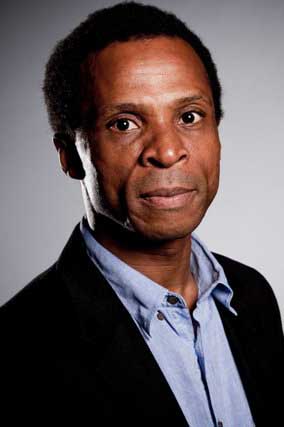
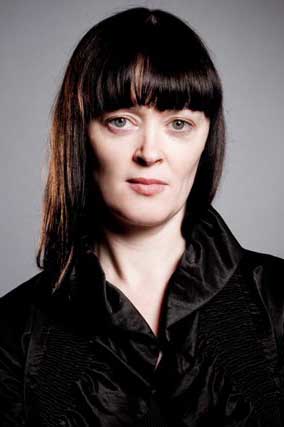
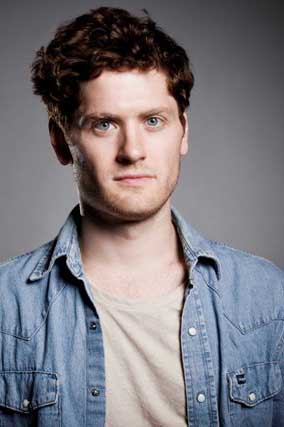
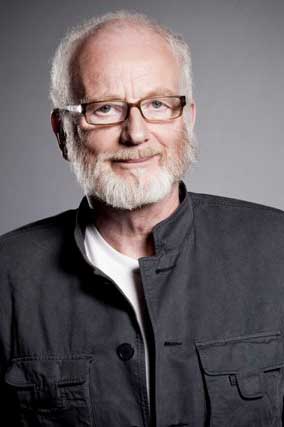
Writer Alexi Kaye Campbell and actors Kyle Soller, Ian McDiarmid & Bronagh Gallagher in discussion with the Royal Court’s Diversity Associate, Ola Animashawun.… Read more
The Royal Court Theatre presents
by Alexi Kaye Campbell
25 Aug - 1 Oct 2011
Jerwood Theatre Downstairs
Tickets: £28, £20, £12. Mondays all seats £10
“Trouble is we don’t believe in the same God anymore”
Next Production: truth and reconciliation
On a beautiful September morning in New York Sophie forces Tom into a decision. The choice he makes, and the events of that day, will change their lives forever.
Travelling from America to Britain to a remote Greek island this epic new play explores the relationship between faith and capitalism and asks fundamental questions about the true meaning of love.
Alexi Kaye Campbell’s debut play The Pride, produced in 2008 in the Jerwood Theatre Upstairs at the Royal Court, won an Olivier Award for Outstanding Achievement in an Affiliate Theatre, the John Whiting Award for Best Play and a Critics’ Circle Award for Most Promising Playwright. His second play Apologia opened at the Bush Theatre in 2009 and was nominated for Best Theatre Play at the Writers Guild Awards 2009 and short-listed for the John Whiting Award.
Director Jamie Lloyd returns to the Royal Court to reunite with Alexi after directing The Pride. An associate of the Donmar Warehouse, his credits there include The 25th Annual Putnam Spelling Bee, Piaf and Polar Bears. Elsewhere, his credits include Salome (Headlong), Three Days of Rain and The Little Dog Laughed (West End), The Caretaker (Sheffield Theatres).
Running time 2hrs 45mins approx, including two intervals
£10 Monday tickets are available on the day of perf from 9am online, 10am in-person.
Visit our bookshop for Alexi Kaye Campbell’s selection of books that influenced The Faith Machine. Available through the Royal Court bookshop and Online Shop.
| Date | Time | Venue | Notes | Prices | Booking Link |
|---|---|---|---|---|---|
Available Performances |
|||||
Dates in August |
|||||
| Thu 25 Aug 2011 | 7:30pm | Concessions Available, Preview Performance | Jerwood Theatre Downstairs | £28, £20, £12 | |
| Fri 26 Aug 2011 | 7:30pm | Concessions Available, Preview Performance | Jerwood Theatre Downstairs | £28, £20, £12 | |
| Sat 27 Aug 2011 | 7:30pm | Concessions Available, Preview Performance | Jerwood Theatre Downstairs | £28, £20, £12 | |
| Tue 30 Aug 2011 | 7:30pm | Concessions Available, Preview Performance | Jerwood Theatre Downstairs | £28, £20, £12 | Sold Out |
| Wed 31 Aug 2011 | 7:00pm | Press Night | Jerwood Theatre Downstairs | £28, £20, £12 | |
Dates in September |
|||||
| Thu 1 Sep 2011 | 7:30pm | Concessions Available | Jerwood Theatre Downstairs | £28, £20, £12 | |
| Fri 2 Sep 2011 | 7:30pm | Concessions Available | Jerwood Theatre Downstairs | £28, £20, £12 | |
| Sat 3 Sep 2011 | 2:30pm | Concessions Available, Saturday Matinees | Jerwood Theatre Downstairs | £28, £20, £12 | |
| Sat 3 Sep 2011 | 7:30pm | Concessions Available | Jerwood Theatre Downstairs | £28, £20, £12 | |
| Mon 5 Sep 2011 | 7:30pm | Jerwood Theatre Downstairs | £10 | Sold Out | |
| Tue 6 Sep 2011 | 7:30pm | Jerwood Theatre Downstairs | £28, £20, £12 | ||
| Wed 7 Sep 2011 | 7:30pm | Jerwood Theatre Downstairs | £28, £20, £12 | ||
| Thu 8 Sep 2011 | 7:30pm | Jerwood Theatre Downstairs | £28, £20, £12 | ||
| Fri 9 Sep 2011 | 7:30pm | Jerwood Theatre Downstairs | £28, £20, £12 | ||
| Sat 10 Sep 2011 | 2:30pm | Concessions Available, Saturday Matinees | Jerwood Theatre Downstairs | £28, £20, £12 | |
| Sat 10 Sep 2011 | 7:30pm | Jerwood Theatre Downstairs | £28, £20, £12 | ||
| Mon 12 Sep 2011 | 7:30pm | Jerwood Theatre Downstairs | £10 | Sold Out | |
| Tue 13 Sep 2011 | 7:30pm | Jerwood Theatre Downstairs | £28, £20, £12 | ||
| Wed 14 Sep 2011 | 7:30pm | Jerwood Theatre Downstairs | £28, £20, £12 | ||
| Thu 15 Sep 2011 | 2:30pm | Concessions Available, Mid-Week Matinee | Jerwood Theatre Downstairs | £28, £20, £12 | |
| Thu 15 Sep 2011 | 7:30pm | Jerwood Theatre Downstairs | £28, £20, £12 | ||
| Fri 16 Sep 2011 | 7:30pm | Jerwood Theatre Downstairs | £28, £20, £12 | ||
| Sat 17 Sep 2011 | 2:30pm | Concessions Available, Saturday Matinees | Jerwood Theatre Downstairs | £28, £20, £12 | |
| Sat 17 Sep 2011 | 7:30pm | Jerwood Theatre Downstairs | £28, £20, £12 | ||
| Mon 19 Sep 2011 | 7:30pm | Jerwood Theatre Downstairs | £10 | ||
| Tue 20 Sep 2011 | 7:30pm | Jerwood Theatre Downstairs | £28, £20, £12 | Sold Out | |
| Wed 21 Sep 2011 | 7:30pm | Jerwood Theatre Downstairs | £28, £20, £12 | ||
| Thu 22 Sep 2011 | 2:30pm | Concessions Available, Mid-Week Matinee | Jerwood Theatre Downstairs | £28, £20, £12 | |
| Thu 22 Sep 2011 | 7:30pm | Jerwood Theatre Downstairs | £28, £20, £12 | ||
| Fri 23 Sep 2011 | 7:30pm | Jerwood Theatre Downstairs | £28, £20, £12 | ||
| Sat 24 Sep 2011 | 2:30pm | Concessions Available, Saturday Matinees | Jerwood Theatre Downstairs | £28, £20, £12 | |
| Sat 24 Sep 2011 | 7:30pm | Jerwood Theatre Downstairs | £28, £20, £12 | ||
| Mon 26 Sep 2011 | 7:30pm | Jerwood Theatre Downstairs | £10 | ||
| Tue 27 Sep 2011 | 7:30pm | Post-Show Talk | Jerwood Theatre Downstairs | £28, £20, £12 | Sold Out |
| Wed 28 Sep 2011 | 7:30pm | Captioned Performance | Jerwood Theatre Downstairs | £28, £20, £12 | |
| Thu 29 Sep 2011 | 2:30pm | Concessions Available, Mid-Week Matinee | Jerwood Theatre Downstairs | £28, £20, £12 | |
| Thu 29 Sep 2011 | 7:30pm | Jerwood Theatre Downstairs | £28, £20, £12 | Sold Out | |
| Fri 30 Sep 2011 | 7:30pm | Jerwood Theatre Downstairs | £28, £20, £12 | ||
Dates in October |
|||||
| Sat 1 Oct 2011 | 2:30pm | Concessions Available, Audio Described Performance, Saturday Matinees | Jerwood Theatre Downstairs | £28, £20, £12 | |
| Sat 1 Oct 2011 | 7:30pm | Jerwood Theatre Downstairs | £28, £20, £12 | Sold Out | |
Sold out Performances |
|||||
Mondays all seats £10 (available on the day of perf from 9am online, 10am in-person.)
Concessions £5 off top two prices (available in advance for all performances until 3 Sep inclusive and all matinees. For all other performances, available on a standby basis on the day)
25s and under £8 (ID required, not bookable online)
School and HE Groups of 8+ 50% off top two prices (available Tuesday–Friday)
Groups of 6+ £5 off top price (available Tuesday–Friday)
Access £12 (plus a companion at the same rate)
Director
Writer
Designer
Lighting
Music and Sound
Video and Projection
4 stars Michael Billington, The Guardian, Wednesday 1st September 2011
Alexi Kaye Campbell has previously written two impressive plays, The Pride and Apologia, about the way gay rights and feminism have lost something of their initial idealism. Now he has gone for the big one: a three-act play about the conflict between faith and the free market in the modern world. And, although the piece occasionally meanders, I admire it for its expansive ambition and largeness of spirit.
Campbell begins in New York in September 2001. Sophie, an idealistic Englishwoman, presents her American lover, Tom, with a moral choice: she will dump him unless he junks a massive advertising account he has secured with a pharmaceutical company that has used Ugandan children as a laboratory experiment. We then jump back to 1998 where Tom and Sophie are visiting her father on the Greek island of Patmos where another moral drama is being played out. The father, an Anglican bishop, is under pressure from a Kenyan cleric not to quit the church over its inflexible attitude to homosexuality: an argument prosecuted with great vigour on both sides. And this is only the first act.
In the course of nearly three hours, and many leaps back and forth in time, it gradually becomes clear what everyone stands for. Sophie, who goes on to report from Iraq and Afghanistan, clearly represents an untarnished sense of purpose and humanist faith. Edward, her father, embodies the disillusion of a devout believer shocked at what he sees as the primitive prejudice of the modern church. And Tom, once an aspirational novelist, exemplifies the rootless uncertainty of someone who has sold out to the seductive temptations of capitalism.
One could easily pick holes in Campbell’s larger argument and specific details. Isn’t advertising a too obvious symbol of commercial compromise? And, by including in his cast a Chilean Marxist, a Ukrainian exile and a Ugandan victim, isn’t Campbell straining a bit hard for global representation? One might also question the way Sophie only rehearses her qualms about her lover’s dubious values once he has landed a fat contract. But Campbell’s play overcomes its flaws because it is saying something important: that individualism is insufficient, that mankind lives by myths and stories and that we all need some kind of faith even if we can no longer subscribe to the dogmas of organised religion.
Jamie Lloyd’s production also puts vivid theatrical flesh on Campbell’s ideas. Hayley Atwell as Sophie excellently surmounts the problem of playing a truly good woman by suggesting she is tempted by worldly vanity. Ian McDiarmid as her father, decaying in body but tough in spirit, also memorably locks horns with Jude Akuwudike as an impassioned Kenyan bishop. And, although Sophie’s lover tests one’s patience, Kyle Soller endows him with a compelling neurotic insecurity and a genuine potential for change. Even if the tension flags a bit in the second act, this remains an urgent play that has the courage to address big issues: above all, the need to retain our idealism in a world where ideology is suspect, religion tarnished and the free market wholly discredited. 4 stars Libby Purves, The Times, Friday 2nd September 2011
When I tell you that it starts with a young couple having a shrill bedroom row about the ethics of a multinational drug company, with a ghost interrupting, and later works up to the spectacle of a retired bishop with dementia having his incontinence pad changed by his left-wing journalist daughter while he angrily recites 1 Corinthians xiii, her ad-man lover babbles on his mobile about the Maybelline eyeshadow account, and a Ukrainian former prostitute makes beetroot salad . . . well, you may flinch.
Don’t. Alexi Kaye Campbell’s new play is ambitious, impassioned and eloquent , with some of the best laughs since Clybourne Park. Deftly signposted, it jumps backwards and forwards over 13 years — significantly including the decade since 9/11 — in the lives of Sophie and Tom. Sophie (Hayley Atwell) is an earnest bishop’s daughter whose childhood faith is transformed into social conscience. Tom is Kyle Soller, ganglingly ginger, tuning his cocky motor-mouth act to a brilliant awkwardness as an ambitious advertising copywriter. He rejects ethics for fun and money, an Everyman for the Enron age. A nice irony is his ability to declare that life is a ruthless jungle, while being wholly unable to face an old man’s soiled pad.
These two love one another, though differences drive her into the arms of a Chilean Marxist UCL lecturer (“The twin towers were the Berlin Wall of a certain type of capitalism”) and him to an airhead interior decorator, a hilarious cameo from Maya Wasowicz.
Looming over both is the waspish, suavely angry performance of Ian McDiarmid as the liberal bishop: first a ghost at his daughter’s elbow, then in his prime demolishing a homophobic fellow cleric (Jude Akuwudike, wittily doubled later as a larky gay bridegroom). Finally we see him in dementia, his passion undimmed: “Faith is not a state of mind, it is a state of heart”.
Maybe issues are heaped on with too free a hand; maybe having two intervals is jerky, though it does enable us to ask one another “Where the hell can it go next?” Certainly the bland white walls and occasional apocalyptic projections in Jamie Lloyd’s production feel unnecessarily tricksy. Never mind. This funny, thoughtful, decent-spirited play will see many future productions. It asks huge questions about what life is worth without belief, scorns the reductive banality of Darwinist atheism, affirms the power of myth and makes you laugh.
4 stars David Jays, The Sunday Times, Sunday 4th September 2011
This is what love looks like. A young woman kneels in the Greek sun and swabs her demented father clean after he has soiled himself. It is unromantic, humiliating, difficult for everyone. Hearts and roses are the easy stuff. Incontinence is the test.
At least, that’s the case in Alexi Kaye Campbell’s new work at the Royal Court. It’s a big play that plunges into the question of how we live in the world. The opening scene takes place on what is surely the defining day of this century so far: 9/11. For some, the terrible events set ideology in concrete; for others, it represents a blow to belief. “First goes the conviction,” a character reflects. “Then everything else.”
On that “perfect September day” in New York, we are thrown into a hurtling row between Sophie (Hayley Atwell), a British journalist, and her boyfriend, Tom (Kyle Soller), an American advertising exec. Why are they fighting? Tom has abandoned his novelist aspirations for Madison Avenue, and his latest client is a dodgy pharmaceutical company.Sophie views this as an ethical compromise too far. Her bare feet oppose his shiny shoes: in Jamie Lloyd’s assured production, they stand straight, at opposite sides of the stage, intransigent twin towers. As they split, calamity arrives.
Is it too much to make 9/11 a metaphor for their misconnecting relationship? The Faith Machine covers so much that it isn’t a problem. The play’s arc moves back and forward over 12 years — Campbell is interested in the possibility of change and often juxtaposes eras (as in The Pride, his award-winning debut, set in the present and the 1950s). Tom and Sophie’s break-up is attended by an unseen interloper: Edward, her father’s ghost. Ian McDiarmid makes him a baleful figure in creased white linen, quoting Yeats from beyond the grave (“The blood-dimmed tide is loosed”).
The play then loops back three years to Edward’s home on the island of Patmos, in the Aegean Sea. He is an Anglican bishop who has abandoned the church, disgusted by its stance on homosexuality. As his daughter will do, he exercises ethical choice by renunciation: an uneasy dramatic option, leaving rather than doing. By contrast, the cleansing scene in Edward’s last days is compellingly compact with ordinary care — no wonder the former bishop quotes the Gospels’ parable on plucking grain on the Sabbath, about dealing pragmatically with hunger rather than sticking to unyielding principle.
This satisfying evening is served up with two intervals (unheard of in these 90-minutes-and-you’re-done days). It is emblematic of Dominic Cooke’s Royal Court that the theatre marks the anniversary of 9/11 not with a geopolitical epic, but with a call to spiritual reflection, urging us to pause and ask, as Sophie suggests: “How did I get here? Where am I headed?”
Tom would answer with trembling insistence that humans are no more than their appetite, “ruthless and indiscriminate” animals snarling in the dark. Or are we, as Sophie believes, “faith machines”, hard-wired to find purpose? Campbell lets his subject off the hook here: Tom pimps for big pharma and takes calls about sexing up eyeliner, so his career choices are a sitting target, which hardly interrogates our daily bargain with capitalism.
The play suffers from what we might call the David Hare conundrum — using your heroine as an index of impassioned virtue, but making her a theatrical dead weight. Sophie’s advocacy sounds self-righteous, and it’s easier to agree with her unreasonable idealism when she’s not on stage. A shame, because Atwell is a lush actress, and has a tipsy, funny scene, lopsiding about on a broken heel.
Tom’s bad faith is far more fun. The American-born Soller, a wonderfully elastic young actor, made his mark at the Young Vic recently in Government Inspector. He’s a handsome man whose mobile face can become a cartoon, eyes round as marbles, cheeks squishing and stretching, voice growing squeaky in panic. He is splendidly queasy as Tom deals — badly, it’s fair to say — with Edward’s soiled clothes, dragging stinky incontinence pants behind him off stage, quivering and at war with his gag reflex.
Tom’s maladroit blundering from gaffe to gaffe is oddly endearing. Meeting a brace of bishops sends him into a spin: at grace, he says “Absolutely”, not “Amen”, then embarks on a rambling question about the religious calling that takes in Lazarus, Galileo and Mary Poppins.
The gold-standard performance comes from McDiarmid. Vocally, he is spellbinding, giving lines dextrous topspin and unexpected bursts of power. It’s all too easy to believe in humanity when we meet his Edward, because he contains so much. He throws out quizzical, impossibly huge questions (“What’s Hamlet about?”), but fury rumbles through his voice. McDiarmid’s ivory complexion turns beet red in rage, his plosives firing like pistons, then he twists his voice down to a growling wire: “The only sin is the absence of love.”
Campbell was previously an actor, and he writes actors’ plays — not just because he gives everyone meaty lines, but because acting is his unstated but vital metaphor, representing not a brittle social mask but an innate dignity. Campbell uses his actors as adventurers, committed to exploring possibilities, finding new decencies, opening new aspects to the self. They can change. So can we.
4 stars Tim Walker, The Sunday Telegraph, Sunday 4th September 2011
The majority of playwrights appear to have lost interest in pondering the human condition a very long time ago.
As angry and idealistic as they might have been in their youth, they content themselves in their youth, they content themselves in their compromised middle age with bashing out adaptations of other writers’ works, producing thin layers of dialogue to fill in the spaces between the big numbers in old musicals, and even re-fashioning film scripts for the stage.
It strikes me as not just ignominious, but also a dereliction of duty. If ever a country were crying out for moral, if not spiritual, sustenance it is modern Britain in this age of disillusionment, pessimism and rage.
One therefore applauds Alexi Kaye Cambell for trying to get back to what it out to be with The Faith Machine. I don’t say it is a great work – it doesn’t even live up to the promise of his Olivier award- winning debut The Pride – but its heart is in the right place. This is a playwright who undoubtedly has –in the words of the late pioneering heart surgeon Christiaan Barnaard – the courage to fail.
It stars Hayley Atwell, the Captain America star, as Sophie, who is horrified when her other half Tom, a once serious writer who has sold out to the advertising industry, appears willing to work for an ethically dubious medical company.
Kyle Soller is perhaps too over – emphatic, if not wide-eyed and rustic, and actor to be taken seriously as a highly paid Madison Avenue ad man, and the chemistry between him and the sexy, sophisticated Miss Atwell does not convince.
On their journey towards some degree of enlightenment there are, too, what seem to be superfluous and exploitative nods to 9/11 an annoying comedy Ukrainian (Bronagh Gallagher) and an awful lot of what can only be described as pretentious cant.
This production is, however, redeemed by that wily old stager Ian McDiarmid. He plays Sophie’s father, who is also a bishop.
He appears a fey and rather supercilious character at the outset, but early hints at his frustration with the Church’s petty preoccupations in a period of such enormous challenges eventually boil over into an awesome rage. It is a performance of mesmerising intensity.
Jamie Lloyd – who directed The Pride and has had a somewhat chequered run with The 25th Annual Putnum County Spelling Bee (as shallow a piece of theatre as it is possible to imagine) and the boring Polar Bears – delivers this epic production with a commendable sense of earnestness and purpose.I am not sure, however, if, at almost three hours long, it doesn’t outstay its welcome a little, particularly when all Kaye Cambell can offer at the end is a quotation from The Bible and a question.
I also wonder at the wisdom of having two intervals: do even audiences seeking the meaning of life have time for that sort of indulgence these days?
“Hallelujah! Miracles do happen in this intriguing, thoughtful play.”
Daily Mail
“A welcome, brave and searching piece of drama…filled with wit, lyricism and compassion”
The Financial Times
“Drawn with grace and blessed with a palpable generosity of spirit…Kaye Campbell strikes me as the most interesting playwright to have emerged in recent years”
The Daily Telegraph
“Intellectual and entertaining…admirable”
The Independent on Sunday
Special Dates |
|
|---|---|
| Concessions Available |
Thu 25 Aug, 7:30pm Fri 26 Aug, 7:30pm Sat 27 Aug, 7:30pm Tue 30 Aug, 7:30pm Thu 1 Sep, 7:30pm Fri 2 Sep, 7:30pm Sat 3 Sep, 2:30pm Sat 3 Sep, 7:30pm Sat 10 Sep, 2:30pm Thu 15 Sep, 2:30pm Sat 17 Sep, 2:30pm Thu 22 Sep, 2:30pm Sat 24 Sep, 2:30pm Thu 29 Sep, 2:30pm Sat 1 Oct, 2:30pm |
| Preview Performance |
Thu 25 Aug, 7:30pm Fri 26 Aug, 7:30pm Sat 27 Aug, 7:30pm Tue 30 Aug, 7:30pm |
| Press Night |
Wed 31 Aug, 7:00pm |
| Saturday Matinees |
Sat 3 Sep, 2:30pm Sat 10 Sep, 2:30pm Sat 17 Sep, 2:30pm Sat 24 Sep, 2:30pm Sat 1 Oct, 2:30pm |
| Mid-Week Matinee |
Thu 15 Sep, 2:30pm Thu 22 Sep, 2:30pm Thu 29 Sep, 2:30pm |
| Post-Show Talk |
Tue 27 Sep, 7:30pm |
| Captioned Performance |
Wed 28 Sep, 7:30pm |
| Audio Described Performance |
Sat 1 Oct, 2:30pm |
See the Dates & Tickets tab for all dates.
Writer Alexi Kaye Campbell and actors Kyle Soller, Ian McDiarmid & Bronagh Gallagher in discussion with the Royal Court’s Diversity Associate, Ola Animashawun.… Read more
Box Office: 020 7565 5000
Administration: 020 7565 5050
Principal Sponsor: Coutts